

shahid
seo analyst
3 August 2026
5 read
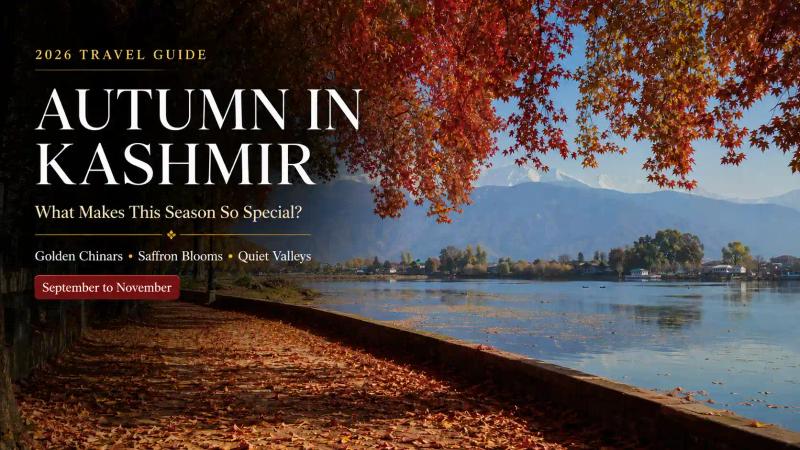
Autumn in Kashmir is the season most travelers never plan for — and that's exactly why it delivers so much when they do. Most people time their trip around spring tulips or the first winter snow. Between late September and mid-November, though, the valley goes through a transformation that has nothing to do with a single garden or gondola ride and everything to do with the entire landscape changing color at once. If you've already done the tulip-and-Gulmarg version of Kashmir, autumn shows you a side of it most visitors miss entirely.
This guide covers exactly what makes autumn in Kashmir worth building an itinerary around — the Chinar color, the saffron bloom, the harvests, the crowds you won't have to fight through — along with when to go, what to pack, and a sample itinerary to work from.
The Chinar Trees Turn the Whole Valley Gold and Crimson
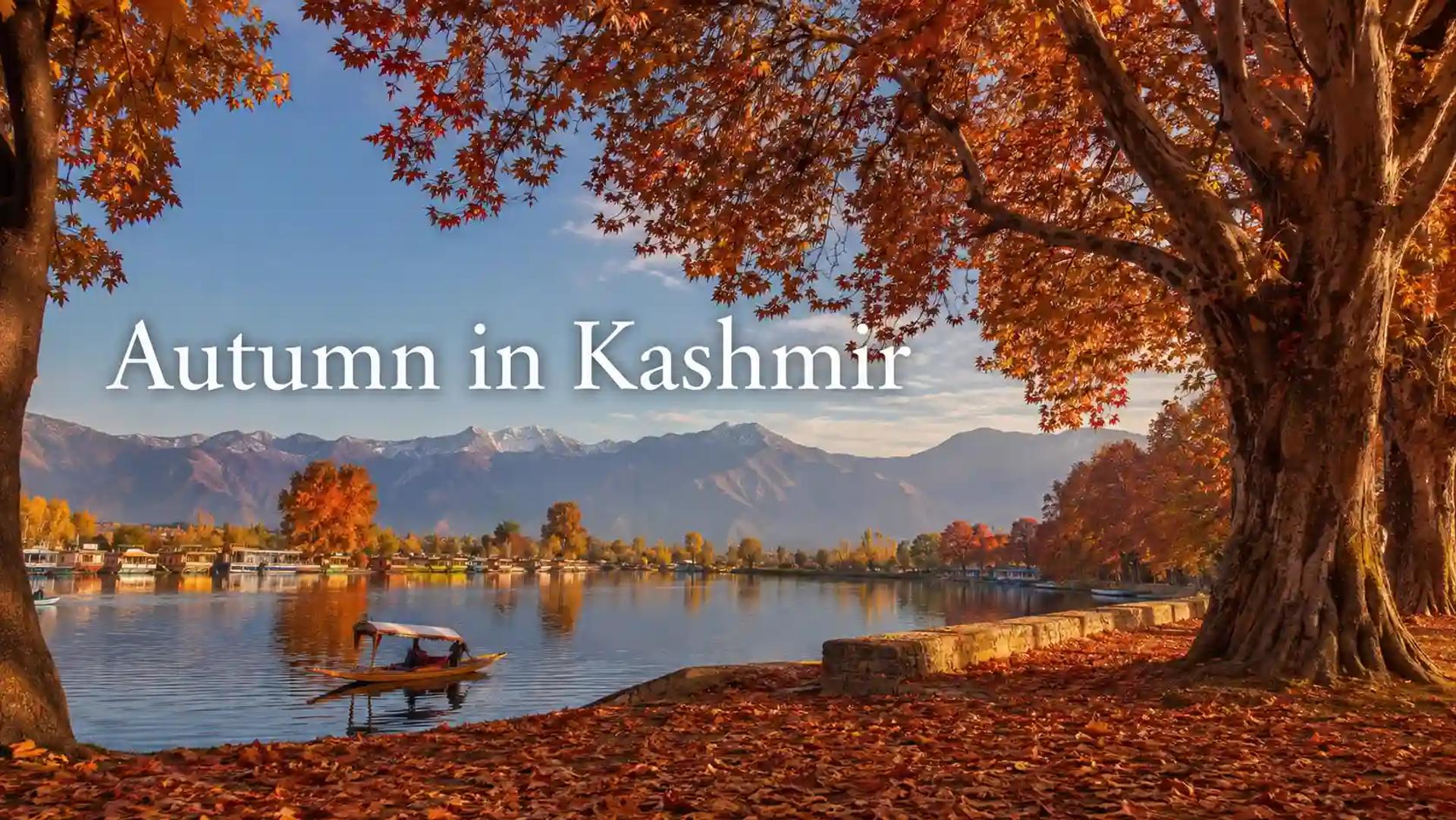
This is the headline reason people chase autumn in Kashmir, and it's not an exaggeration. Kashmir's centuries-old Chinar trees — the ones lining Mughal gardens, old Srinagar streets, and entire riverbanks — turn deep red, orange, and gold through October. Some of these trees are believed to be over 400 years old, planted during the Mughal era specifically for the gardens they still shade today.
Nishat Bagh, Shalimar Bagh, and the older parts of Srinagar city are lined with them, and walking under a full canopy in peak color is a completely different experience from seeing the same gardens in green summer photos. If you're building a Kashmir itinerary around gardens and heritage sites, our Places to Visit in Kashmir guide covers these locations in more depth for other seasons too.
Saffron Fields in Pampore Bloom for Barely Two Weeks
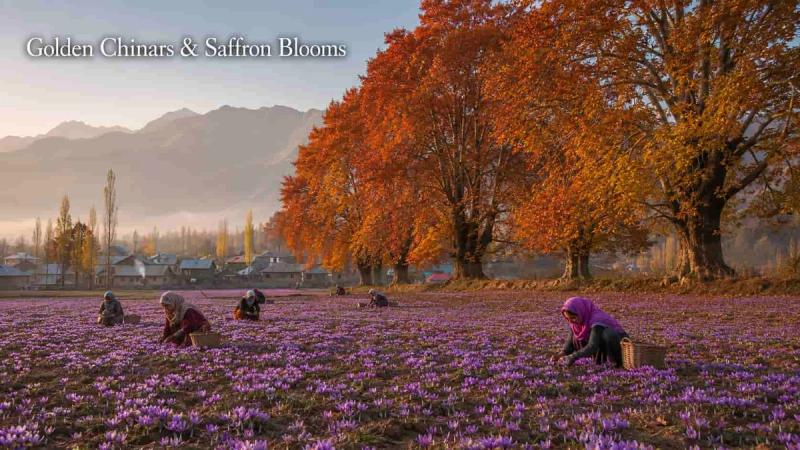
Kashmir grows nearly all of India's saffron, almost entirely around Pampore, just outside Srinagar. The purple crocus flowers bloom for a very narrow window, usually late October into early November, turning entire fields violet almost overnight.
It's one of the few times of year the harvest itself is genuinely worth watching, not just the flowers — pickers work at dawn since the blooms wilt fast once the sun is up. Most standard Kashmir itineraries skip Pampore entirely since it isn't part of the usual Srinagar-Gulmarg-Pahalgam circuit, which is exactly why it's worth planning for specifically if your dates line up.
Apple and Walnut Harvest Season
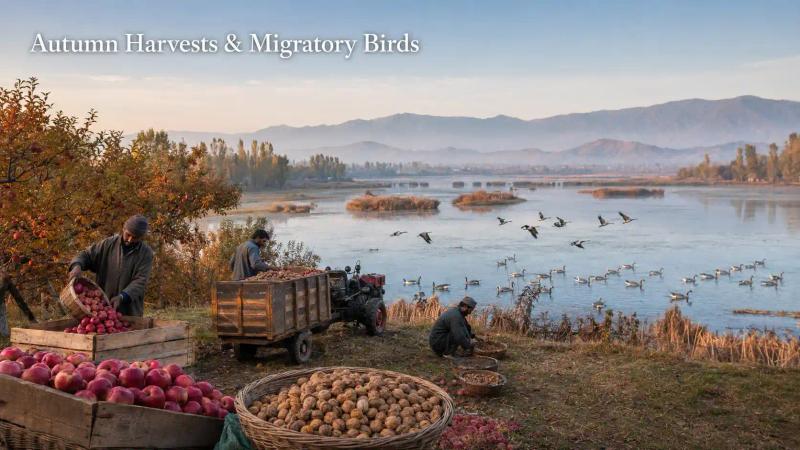
Kashmir's orchards, especially around Sopore and Shopian, are heavy with apples through autumn, and walnut harvesting happens around the same window. Driving through orchard villages during this stretch means passing carts and baskets full of fresh produce being sorted and loaded — a very different rural Kashmir than what most sightseeing-focused itineraries show.
For travelers who've already covered the standard sights on an earlier trip, working an orchard village stop into an autumn Kashmir itinerary is a genuinely different kind of day compared to the usual gardens-and-lake circuit.
Migratory Birds Arrive at Hokersar Wetland
Thousands of migratory birds — including bar-headed geese and various duck species — start arriving at Hokersar wetland near Srinagar from late autumn, on their way further south for winter. Early morning is the best time to visit, when the light is soft and the birds are most active before the day's heat sets in.
For anyone even mildly interested in birdwatching or nature photography, this is a completely different side of Kashmir that summer visitors never get to see, since the birds simply aren't there yet during peak tourist season.
Crisp Air and a Fraction of the Summer Crowds
Peak summer means peak tourist traffic — Gulmarg gondola queues, houseboat waitlists, and packed Dal Lake Shikara rides where you're sharing every frame of your photo with someone else's tour group. By October, most of that pressure eases off while the weather is still comfortable during the day.
It's a genuinely better time to actually experience places rather than photograph them over someone else's shoulder. Hotel and houseboat rates also tend to be friendlier than peak summer, since demand drops even though the scenery arguably gets better.
Where to Experience Autumn in Kashmir
Not every part of the valley changes color at the same pace, so where you spend your days matters if the goal is catching autumn in Kashmir at its best.
| 📍 Place | 🍂 Why Autumn |
|---|---|
| Nishat Bagh & Shalimar Bagh | Mughal gardens lined with centuries-old Chinar trees at peak color |
| Pampore | Saffron fields in bloom, roughly late October to early November |
| Hokersar Wetland | Migratory bird arrivals, quiet and photogenic in early morning light |
| Pahalgam | Forest slopes turning color around the Lidder River, far fewer crowds |
| Old Srinagar Streets | Chinar-lined lanes and riverbanks, quieter than the tourist circuit |
If Pahalgam is on your list, pairing it with an autumn trip is worth reading up on separately — our Pahalgam Tourism Guide covers the sights that hold up well outside peak summer too.
When Exactly Is Autumn in Kashmir?
Roughly mid-September through mid-November, though the Chinar color peak is narrower — usually the second half of October. Early autumn, from mid-September to early October, still has mild, mostly green landscapes with the first color changes just starting to show. Late autumn, especially November, can already bring the first light snow at higher elevations like Gulmarg, which is its own kind of beautiful but a different trip than the golden-Chinar version most people picture when they think of autumn in Kashmir.
Our Kashmir in September guide covers the earlier part of this window in more logistical detail, while our broader Best Time to Visit Kashmir guide maps out how autumn compares to every other season side by side.
Autumn vs Spring vs Summer in Kashmir
| 📌 Aspect | 🍂 Autumn | 🌷 Spring | 🌞 Summer |
|---|---|---|---|
| Crowd levels | Low | Moderate-high (tulips) | Peak season |
| Landscape highlight | Gold and crimson Chinars | Tulip gardens, blossoms | Green meadows |
| Weather | Crisp, cool mornings | Mild, occasional rain | Warm days, pleasant evenings |
| Best for | Photography, honeymooners, quiet trips | Garden tourism, mild-weather travel | Families, full activity list |
If you're weighing Kashmir against other destinations entirely for this time of year, our Kashmir vs Kerala and Kashmir vs Manali comparisons cover how the valley stacks up outside its most obvious seasons too.
What to Pack for Autumn
Mornings and evenings turn cold quickly even while afternoons stay pleasant, so layering matters more than any single heavy jacket. A light-to-mid weight jacket, a couple of warm inner layers, and comfortable walking shoes for garden and riverside walks cover most of the season through October.
If your dates run into November, pack heavier — closer to what you'd bring for early winter, since Gulmarg and Sonamarg can already see the season's first snow. Our What to Pack for Kashmir guide has the full season-by-season breakdown if you're unsure where your travel window falls.

A Sample 5-Day Autumn Itinerary
If you're not sure how to structure an autumn in Kashmir trip around all of this, here's a straightforward base to work from:
- Day 1 — Srinagar: Arrive, settle into a houseboat on Dal Lake, evening Shikara ride as the light turns gold.
- Day 2 — Srinagar gardens: Nishat Bagh and Shalimar Bagh in the morning for Chinar color, old Srinagar in the afternoon.
- Day 3 — Pampore & Hokersar: Early saffron field visit at dawn, followed by Hokersar wetland for migratory birds later in the morning.
- Day 4 — Pahalgam: Drive out to Pahalgam for forest color along the Lidder river, overnight stay.
- Day 5 — Return to Srinagar: Last morning for anything missed, departure.
This can be extended with Gulmarg if your dates fall in the earlier part of the window, before any risk of early snow closures. For couples, our Kashmir Honeymoon Package guide has more on building a similar itinerary with a romantic pace instead of a packed sightseeing one, and if food is part of the plan, our Kashmiri Wazwan Guide is worth reading before you land.
Common Mistakes When Planning an Autumn Trip
- Going too early — visiting in mid-September expecting full Chinar color, when peak is usually the second half of October.
- Skipping Pampore because it's not on the standard tourist circuit — the saffron bloom window is short and easy to miss if it's not planned for specifically.
- Underpacking for the cold mornings because daytime still feels mild.
- Not checking Gulmarg conditions in late November, when early snow can already start affecting the gondola and roads. Our Gulmarg Gondola guide is worth checking before locking in a late-autumn date there.
- Not confirming current safety information before booking, which is a common hesitation even though tourist zones see heavy footfall year-round — our Is Kashmir Safe to Visit guide covers this directly.
Continue Planning Your Kashmir Trip
Conclusion
Autumn in Kashmir doesn't have one single headline attraction the way tulip season or first snowfall does — it has an entire valley changing color at once, a short saffron bloom, a wetland filling up with migratory birds, and roads that aren't jammed with peak-season traffic. If you've already done the well-photographed version of Kashmir, this is the season that shows you a genuinely different side of it, and it rewards travelers who plan the timing deliberately rather than showing up and hoping the colors line up.
Contact Us
Time Your Trip to Peak Chinar Season
The Chinar and saffron windows shift slightly year to year, and getting the timing right is the difference between nice autumn colors and the postcard version. Tell us your travel window and Xogul will build your autumn in Kashmir itinerary around exactly when the valley is at its best.


