

shahid
seo analyst
4 November 2026
16 min read
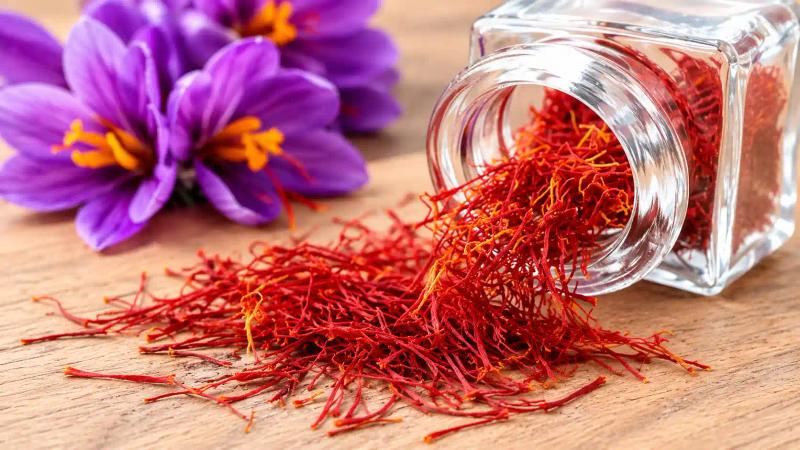
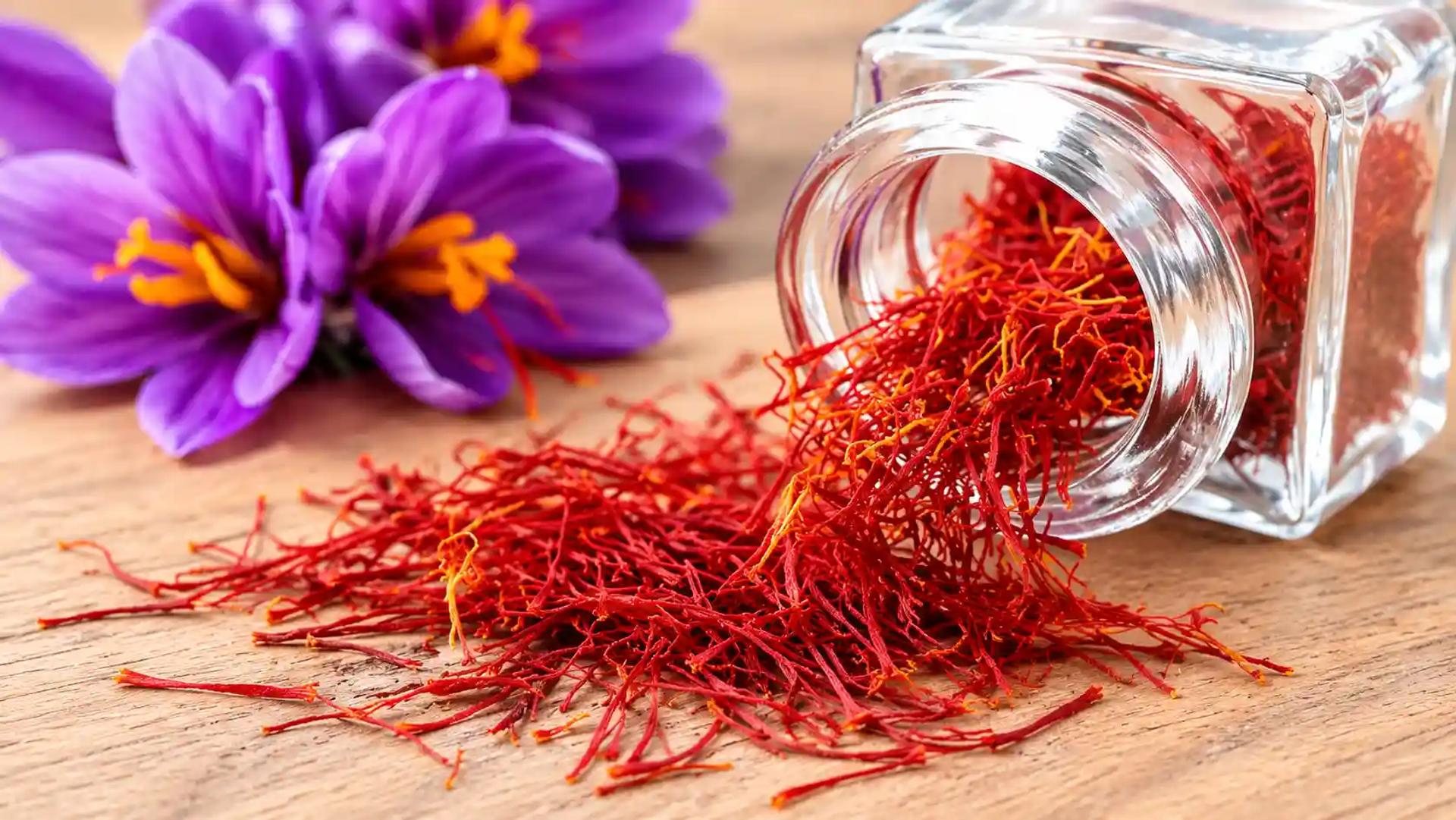
Ask any shopkeeper in Srinagar’s Lal Chowk the kesar price per kg, and you will get three different answers in three different shops. That is not because anyone is lying. Saffron is sold by the gram, graded by the thread, and priced differently at the farm gate, in the wholesale mandi and on a retail shelf. Add a poor harvest and tension in West Asia, and the number moves again.
If you are planning to see the saffron fields yourself, a reliable Kashmir travel agency can build the trip around the harvest. For now, this guide gives you the full picture as of November 2026: the Kashmiri saffron price per kg and the kesar price per gram, how it compares with Iranian saffron, why prices have climbed, and how to avoid paying premium rates for a fake. All figures come from published reports and traders quoted in the press, so treat them as a guide and confirm the live rate before you buy.
Kesar price per kg today: the short answer
As of mid-2026, the Kashmiri kesar price sits at roughly ₹3.25 lakh to ₹3.5 lakh per kg at the wholesale level. This comes from the president of the Saffron Growers Association in Pampore, who told ETV Bharat in June 2026 that saffron selling at around ₹2.5 lakh per kg a year ago was now fetching 30 to 40 per cent more.
Retail is a different story. Once the saffron is cleaned, sorted, packed in glass or tin, branded and sold in 1 gram or 2 gram boxes, the effective price per kg climbs well above the wholesale rate. Reported retail ranges for pure Kashmiri saffron run from about ₹350 to ₹800 per gram, which works out to ₹3.5 lakh to ₹8 lakh per kg depending on grade and packaging.
Here is a simple way to read the saffron price per kg in the market.
These are indicative ranges built from trader statements and published market reports, not a fixed rate card. The lakh figures are simply the per gram figure multiplied by 1,000.
Why Kashmiri kesar costs more than Iranian
Iran produces nearly 90 per cent of the world’s saffron, so it sets the global baseline. In Indian markets, Iranian saffron that typically sold at ₹150 to ₹160 per gram has recently moved to around ₹190 to ₹200 per gram. The Kashmiri saffron price sits well above that, and there are solid reasons.
Quality and potency. A research paper published in the International Journal of Farming and Allied Sciences reported that Kashmiri saffron has a crocin content of 8.72 per cent, compared with 6.82 per cent for the Iranian variety. Crocin is the compound that gives saffron its deep colouring strength, so a pinch of Kashmiri kesar colours more milk or rice than the same pinch of a weaker thread.
The GI tag. Kashmir saffron carries a Geographical Indication tag, which certifies that it comes from the Pampore belt and a few neighbouring pockets. Growers say the tag changed the market. Farmers who earlier received between ₹1.3 lakh and ₹1.5 lakh per kg saw rates climb sharply after certification, and the premium has stayed.
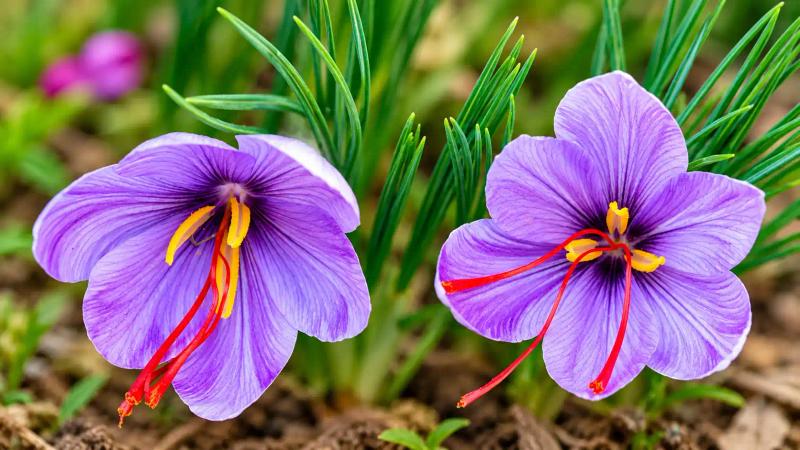
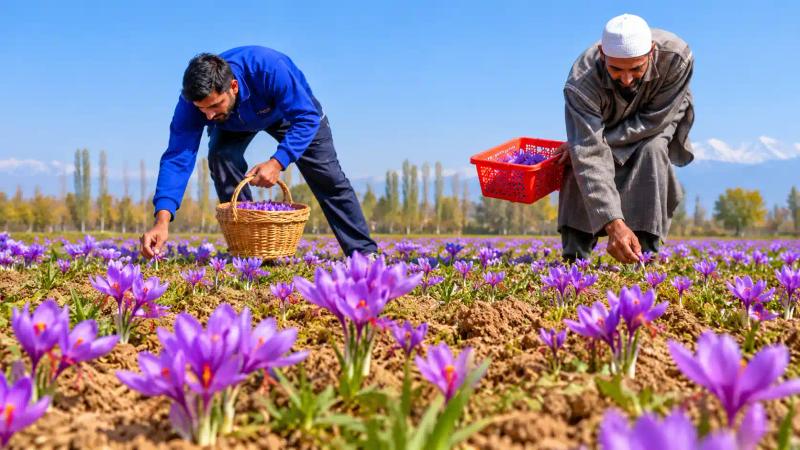
Hand labour. Every flower is picked by hand on cold autumn mornings in Kashmir, usually before sunrise, and the three red stigmas are separated by hand again at home. It takes well over a lakh of flowers to make one kilogram. No machine does this work, which is why the price will never fall to the level of ordinary spices.
Limited land and output. Jammu and Kashmir produces more than 90 per cent of India’s saffron, almost all of it in Pampore in Pulwama district. The supply simply cannot grow on demand.
Mongra, Lacha and guchhi: how grade changes the price
When someone quotes you a kesar price per kg, the first question to ask is which grade. Kashmiri saffron is mainly sold in two categories.
Mongra is the premium grade. It consists only of the deep red stigma tips, with no yellow or white style attached. It has the strongest aroma and colour, and it is the grade most buyers mean when they say “pure Kashmiri kesar.” According to growers quoted in June 2026, Mongra currently sells for about ₹40 to ₹50 more per gram than Lacha.
Lacha contains a small portion of the yellow part of the thread along with the red stigma. It is still genuine Kashmiri saffron, still excellent for cooking, and noticeably cheaper. For everyday use such as kesar doodh, biryani and kehwa, many Kashmiri households actually prefer Lacha because the value is better, and you will see it in every kitchen that celebrates Kashmiri winter food and culture.
Guchhi and lower-grade cuts are broken pieces and mixed lots that usually end up in processed products, sweets and cosmetics. If a seller offers you a “Mongra” price for a visibly mixed, yellow-streaked thread, you are being overcharged.
For international buyers and food manufacturers, saffron is also graded by the ISO 3632 standard, which tests crocin (colour), safranal (aroma) and picrocrocin (bitterness). A lab certificate showing these values is the most reliable proof of grade, far better than a seller’s word.
Why the kesar price per kg jumped in 2026
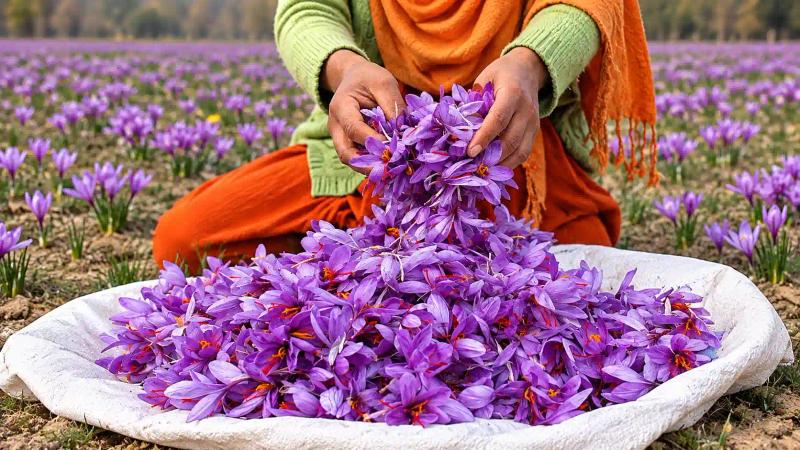
Three things have pushed the kesar price per kg up at the same time.
A weak Kashmir harvest. Official figures show how volatile output is. Saffron production in Jammu and Kashmir was 17.33 tonnes in 2020-21, dipped to 14.87 tonnes in 2021-22 and 14.94 tonnes in 2022-23, jumped to 23.53 tonnes in 2023-24, and fell again to 19.58 tonnes in 2024-25. Pampore growers say the most recent crop was a fraction of normal levels, driven by erratic weather, inadequate rainfall and changing flowering patterns.
Trouble in Iran. With Iran as the world’s dominant producer, any disruption travels through the whole market. Traders say uncertainty over transport routes, insurance and payment channels, linked to tension involving Iran, Israel and the United States, has made importers cautious. Shipments have not been directly halted, but the risk premium has pushed even Iranian prices up by roughly ₹40 per gram.
Both sources tightening together. A Delhi-based trader described an unusual situation where supply from Kashmir and Iran has tightened at the same moment, so buyers are competing for limited stock. Growers expect prices to stay firm unless production recovers and international supply chains stabilise.
For you as a buyer, the practical lesson is simple. Do not expect the price of kesar in India to fall in the next few months, and be very careful of any seller who claims otherwise.
Wholesale vs retail: why per kg maths can mislead
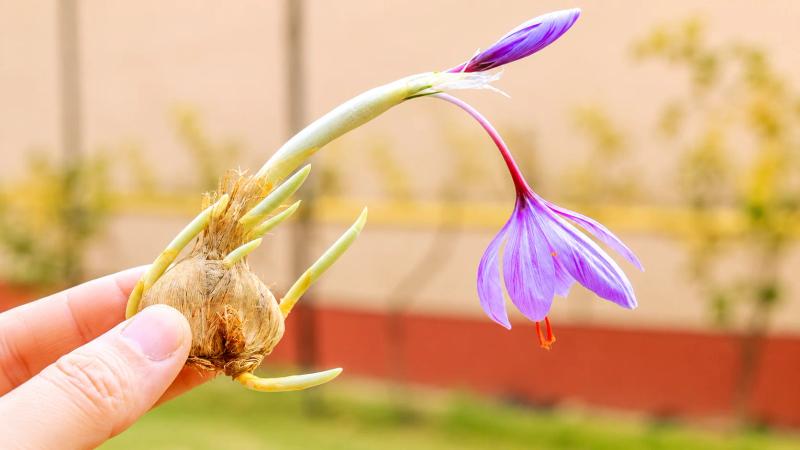
Most people never buy a kilo of saffron. You buy 1 gram, 2 grams or 5 grams. This is where confusion starts.
At wholesale, a kilogram of Mongra might be ₹3.25 to ₹4 lakh, so the kesar price per gram works out to ₹325 to ₹400 before anything else is added. A retailer then covers sorting, packaging, shop rent, GST on packaged goods, shipping and a margin. That is why a 1 gram box of premium Kashmiri kesar on a retail shelf usually costs ₹450 to ₹800 rather than ₹325.
So if you are comparing the kesar price per kg between two sellers, make sure you are comparing the same thing. A mandi quote of ₹3.5 lakh per kg and a retail pack priced at ₹600 per gram are not in conflict. They are the same product at different points in the chain.
Buying directly from a registered grower or a cooperative in Pampore usually gets you closest to the wholesale number, especially if you buy 10 grams or more in one go. A best local tour operator in Kashmir can usually introduce you to genuine growers, which saves you from guesswork.
How much kesar do you actually use?
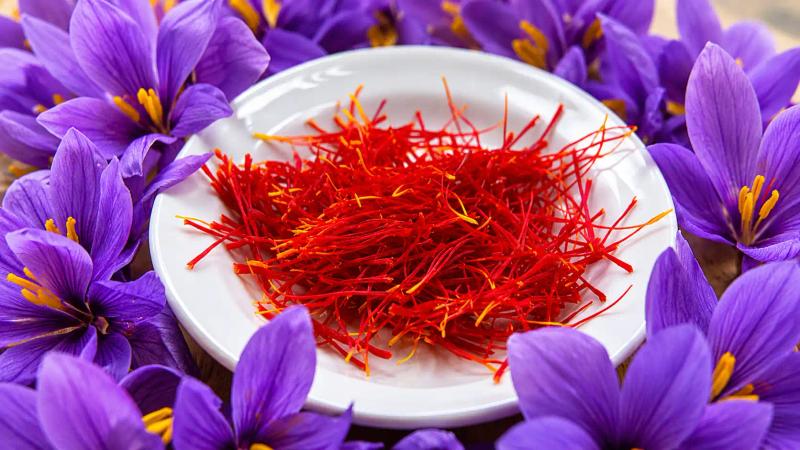
The big per kg number looks scary, but saffron is used in tiny quantities. A glass of kesar doodh needs about 0.015 to 0.02 gram. A cup of kehwa needs a similar amount, and a pot of pulao for four people needs around 0.1 to 0.2 gram. That is why Kashmiri homes keep a small stash ready for the cold months, and why many visitors plan one of our Kashmir winter packages just to taste kehwa at its best.
At a retail price of ₹500 per gram, a glass of saffron milk costs roughly ₹8 to ₹10 worth of saffron. A 2 gram box therefore lasts for dozens of servings. Looked at this way, even at today’s rates, real kesar is one of the more affordable luxuries in your kitchen, as long as it is real.
How to check your kesar is real before you pay
This matters more than the price itself. A very low Kashmiri kesar price is the first warning sign, because the raw material cost of genuine saffron alone is too high for a cheap price. As a rule of thumb, anything marketed as pure Kashmiri saffron for under ₹100 per gram should be treated as fake or heavily adulterated.
Here are practical checks you can do at the shop.
Look at the thread. Real Mongra threads are deep red with a slightly flared, trumpet-shaped tip. A fake often has uniformly shaped threads, strands of dyed corn silk, or a mix of red and bright orange.
Do the cold water test. Drop a few threads into cold water. Real saffron releases a golden-yellow colour slowly, over several minutes, and the thread itself stays red. Dyed fakes turn the water red instantly, and the thread loses its colour.
Smell it. Genuine kesar has a sweet, hay-like, slightly metallic aroma. A chemical or no smell is a warning sign.
Taste a thread. Real saffron tastes mildly bitter. If it tastes sweet, it has probably been soaked in sugar or glycerine to add weight.
Ask for GI and lab proof. Look for the GI-tagged packaging and a batch number. A trustworthy seller will also share a lab report on crocin, safranal and picrocrocin if you ask.
Where to buy genuine kesar in Kashmir
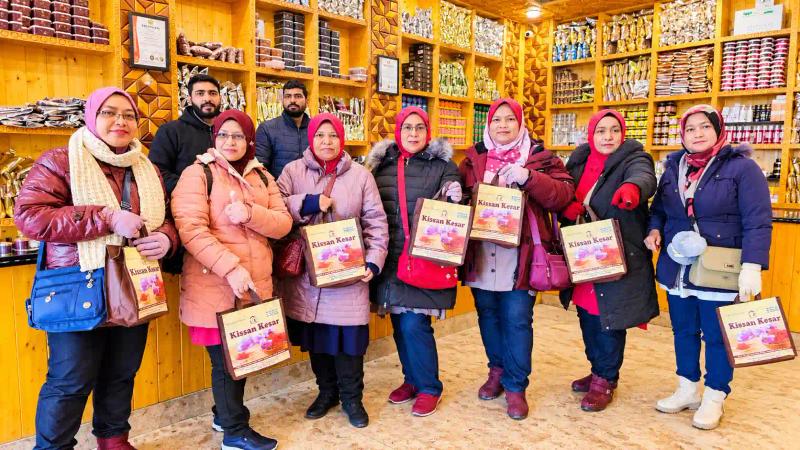
If you are travelling to the Valley, buying pure Kashmiri saffron at the source is one of the best souvenirs you can take home, and one of the reasons Kashmir is so hospitable for tourists is that most shopkeepers will happily let you smell and test before you buy. The most reliable options are the saffron growers and shops in and around Pampore, the India International Kashmir Saffron Trading Centre, and well-established dry fruit and spice shops in Srinagar that provide GI-tagged packs and proper bills.
A few habits will protect you. Compare the saffron price per kg across at least two or three shops before buying. Avoid anyone who approaches you on the street or at a tourist spot offering a “special price” on kesar. Insist on a pack with the GI mark and batch details, and keep the bill. If a price seems too good, it is almost always a lower grade or an outright fake.
If you want a smooth experience in Srinagar, our list of the top Kashmir tour operators for family trips shows how a good local operator can point you to trustworthy shops instead of tourist traps.
Visiting the saffron fields at harvest time
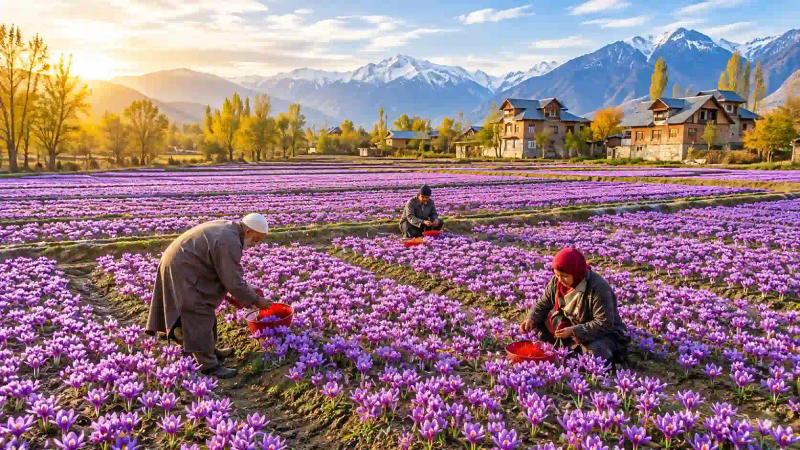
If you are reading this in early November, the timing is perfect. The saffron flowering and harvest season in Pampore runs from late October to mid November, which is one of the best parts of the best time to visit Kashmir for photographers. The purple fields are at their best for only about two to three weeks each year, and the village is roughly 20 km from Srinagar, so it fits easily into a day.
Go early in the morning. Flowers are picked before sunrise, because heat and sunlight reduce quality. You will see families in the fields, and later in the day you will see the stigmas being separated and dried at home. Many visitors then end the day with a shikara ride in Srinagar on Dal Lake, which is a gentle way to finish.
Since this is a short window, plan ahead and book your stay early. A Kashmir 4N/5D tour package gives you enough time for Srinagar, Pampore and the mountains without rushing.
Pair saffron season with more of Kashmir
Once you have seen Pampore, the mountains are close. Many travellers continue to Sonamarg for a walk to Thajiwas Glacier, which is spectacular on clear autumn days.
If you prefer something quieter and more remote, how to reach Gurez Valley explains the route to one of the least crowded corners of the region.
Travelling with children or parents? A ready-made Kashmir family tour package keeps the pace comfortable and the stops short, so everyone enjoys the fields and the food.
Final word
The kesar price per kg in 2026 is high for good reasons: a hand-harvested crop, a small growing area, a weak recent harvest and tension in a region that produces most of the world’s saffron. The smartest buyers do not chase the lowest rate. They check the grade, ask for proof and buy a small quantity from a source they trust. Do that, and a few grams of real Kashmiri kesar will still give you remarkable value in every cup and every pot. And if you are bringing your family to Kashmir to find it yourself, a Kashmir travel agency for family trips can plan the rest.
Contact Xogul
Planning a trip around the saffron harvest? Talk to the Xogul team and we will help you plan your stay, pickups and sightseeing in Srinagar and Pampore.
Frequently asked questions
1. What is the kesar price per kg in India today?
Genuine Kashmiri kesar is trading at around ₹3.25 to ₹3.5 lakh per kg wholesale in 2026, with retail effective rates between ₹3.5 lakh and ₹8 lakh per kg depending on grade and packaging.
2. What is the kesar price per gram for Kashmiri saffron?
Expect roughly ₹350 to ₹800 per gram for premium Mongra at retail. Lacha is cheaper. Anything below ₹100 per gram is very likely fake.
3. Why is Kashmiri kesar so expensive?
Because every flower is picked and processed by hand, a kilogram needs more than a lakh of flowers, the growing area is small, and recent harvests have been weak.
4. Is Kashmiri saffron better than Iranian saffron?
Reports put Kashmiri crocin content at 8.72 per cent versus 6.82 per cent for Iranian, which means stronger colour. Iranian saffron is cheaper and fine for everyday use, but Kashmiri is generally considered the premium choice.
5. What is the difference between Mongra and Lacha?
Mongra is only the red stigma tip. Lacha includes a little of the yellow style. Mongra costs about ₹40 to ₹50 more per gram.
6. Will the price of kesar in India fall soon?
Growers and traders expect the Kashmiri saffron price to stay firm until Kashmir production recovers and supply from Iran stabilises. A sharp fall in the near term looks unlikely.
7. How can I test if kesar is pure?
Use the cold water test, check the thread shape and colour, smell it, and ask for GI tagged packaging and a lab report. Price is the biggest clue: very cheap kesar is not real.
8. Where should I buy kesar in Kashmir?
Buy from Pampore growers, the Kashmir Saffron Trading Centre, or established Srinagar shops that issue GI-tagged packs with proper bills.
9. How much kesar should I use per serving?
About 0.015 to 0.02 gram for a glass of milk or a cup of kehwa, and 0.1 to 0.2 gram for a pot of pulao serving four.
10. When is the saffron harvest in Kashmir?
Late October to mid November, with picking done at dawn. If you are arriving earlier, read Kashmir in September to see what the Valley offers before the flowers bloom.


